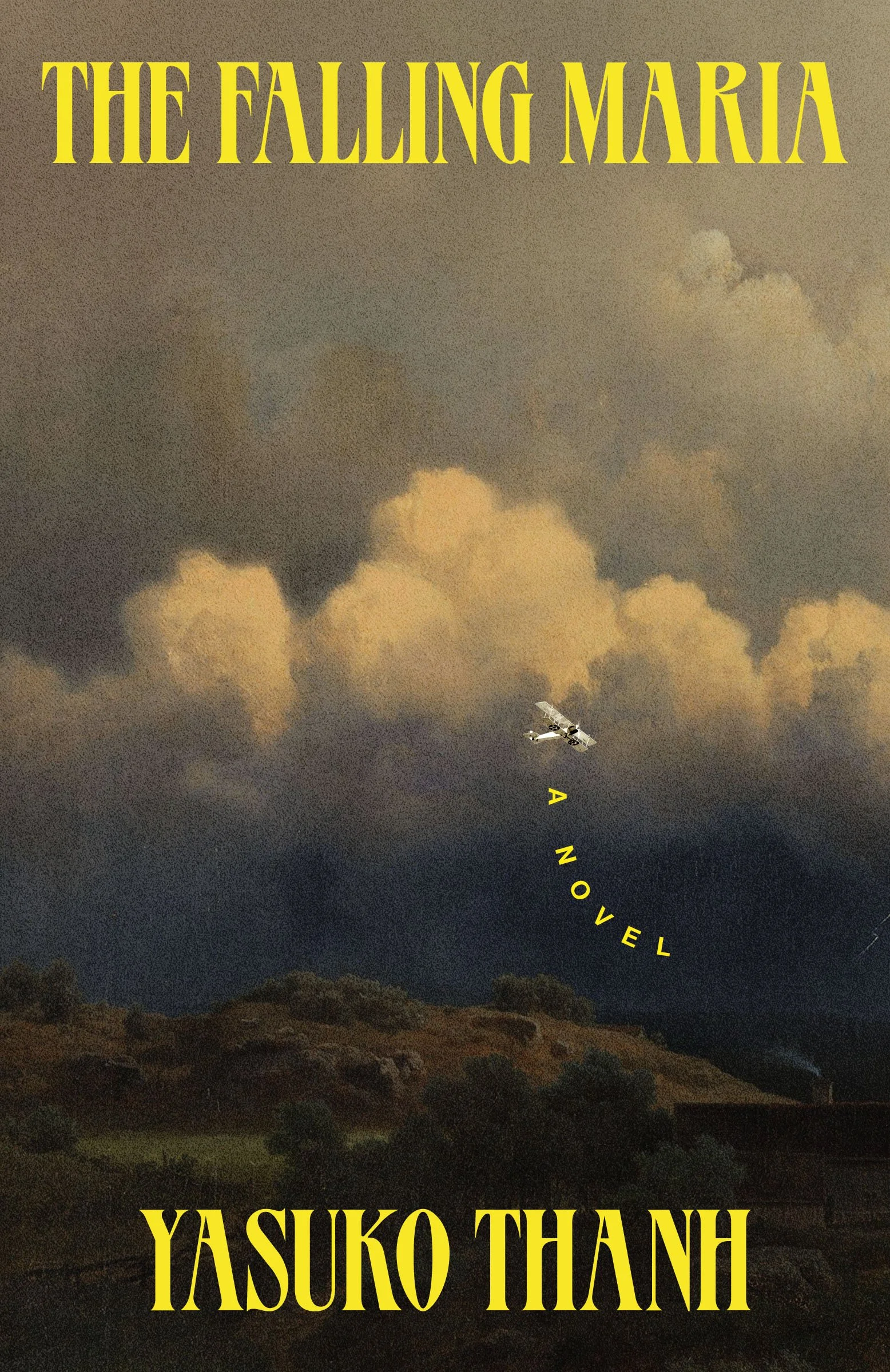
The Falling Maria
a novel by Yasuko Thanh
EXCERPT
ON THE DAY he captured the photograph that would come to be known as the Falling Maria, St. Nicolas had been strolling along the river with a friend who spoke only Latin. Nico had picked up his Latin while loafing around army camps, where idle chatter often mingled with the clang of metal and the scent of grease. Although he still scavenged meals wherever he could find them, he felt himself growing soft, the edges of his resolve blurring like the horizon on a hot day.
The river wound through the landscape like a well-worn boot, its banks lined with mallards and gadwall nestled in the cattails. They eventually found a shaded spot, a brief refuge not far from where others toiled in the depths of the pits, the rhythmic sound of labor echoing in the background, a reminder of both effort and existence. Under a gnarled gumtree, they dangled their feet in the cool water in unspoken communion. They said little, simply recognised the moment.
It was pretty country, in an area still untouched by the ugliness that pursued skirmishes between factions, vibrant with cotton in bloom, the fields of corn standing tall alongside ripening tomatoes. It reminded him of the spirituality he had discovered as a child in the simplicity of pencil lines, the quiet pull of his soul whenever he stood before a painting—the way light and shadow played to seize beauty from time in the moment of its becoming and hold it there.
Yet, for this he had been targeted. And eventually dragged from the home in which he’d grown up—a son from a family of purple-glass artisans within the holiest of bastioned cities. He had been held for months in a secret re-education camp after his paintbrushes were destroyed. As the force of the resistance increased, so too did the number of such camps, which officially did not exist, though unofficially they spread like an infestation across the countryside. But those who spoke of them did so in hushed tones, and at their own risk.
*
St. Adelaide had approached Nico in the break room in the Sweet Vengeance mine, which was nothing more than a hollowed-out niche in the rock—crates for seats, water jugs that tasted of tin. Dust curled in the lamplight.
Nico had been sitting alone, in a corner, eating slowly from a dented tin.
She took a seat uninvited.
Nico looked up—just slightly. “What do you want?”
He studied her face for mockery and found none.
St. Adelaide pulled something from her bag. A camera.
Nico wasn’t entirely sure he liked St. Adelaide. “Be our eyes and ears,” she’d commanded, her tone almost revolutionary—like one of those radicals from the Redemption Front, stirring up trouble. Trouble he’d had enough of.
By then, he had already collapsed inward. Calcified. Not out of apathy. Not because he didn’t care—but because care had curdled. Had become something he couldn’t afford. The weight of his failure had long since turned love into fear.
“Don’t put me in your revolution. I failed my own.”
Yet, still, he took the camera. With care, he wrapped the Leica in his kerchief and tucked it into his side bag.